

Under the Time Line | Solo exhibition
Curator: Hagai Segev
Curator: Hagai Segev
September 2024
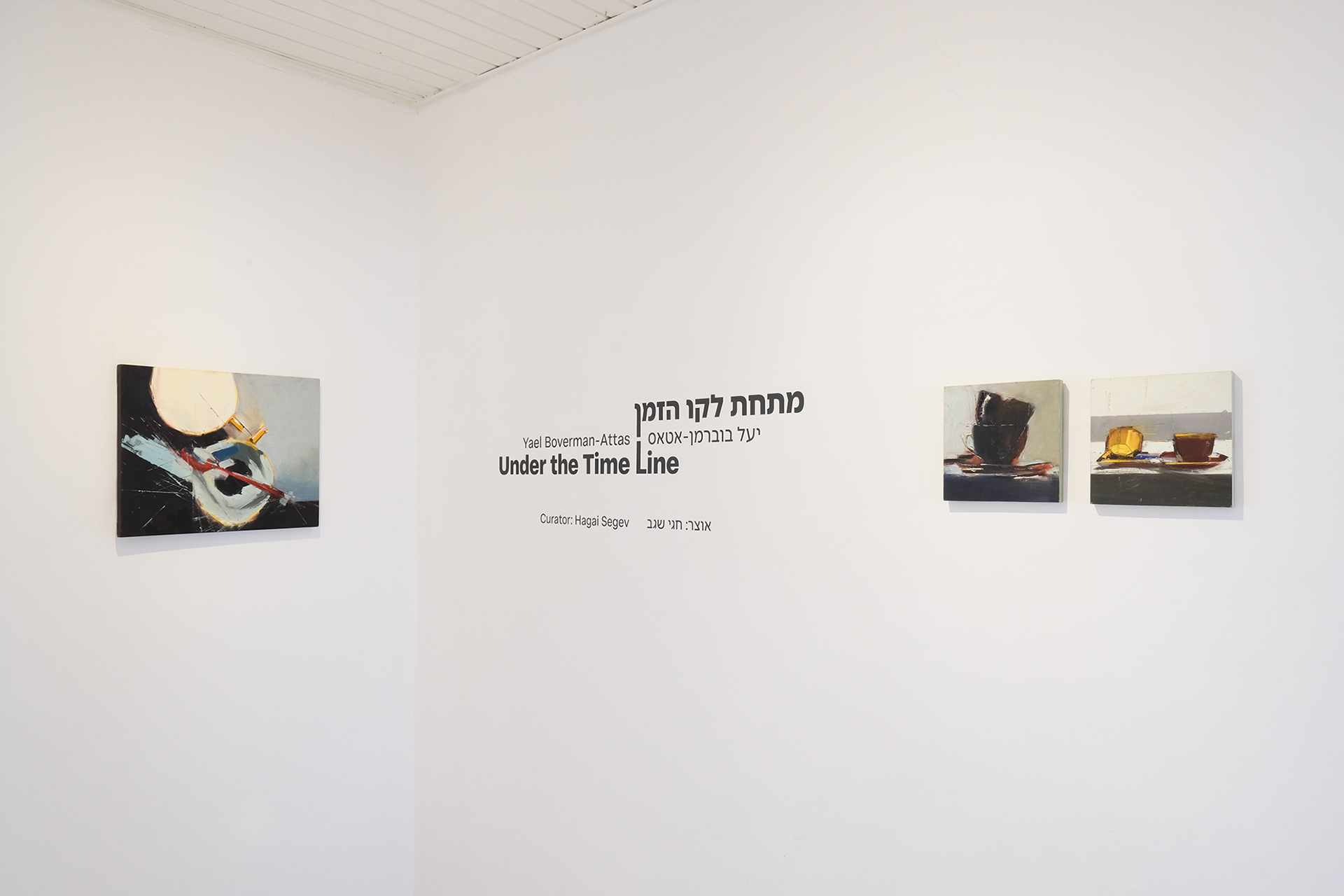
The clicking sound of a silver spoon in a fine porcelain cup, evokes in almost each and every one of us a memory of a pleasant gathering around the dining table or in a cafe, or perhaps a scene from an old Hollywood movie, against the backdrop of an extravagance of items in shades of burgundy and gold, conveying nobility and elegance, mystery and luxury. The tableware, and in particular the fragile porcelain dishes, open up a window through which to understand history, art and hence - the social form of life that was and is no more. Here, at the dining table in our private home, a commemoration of the past takes place, and every such encounter is loaded with elements of concealment, as if under the time line.
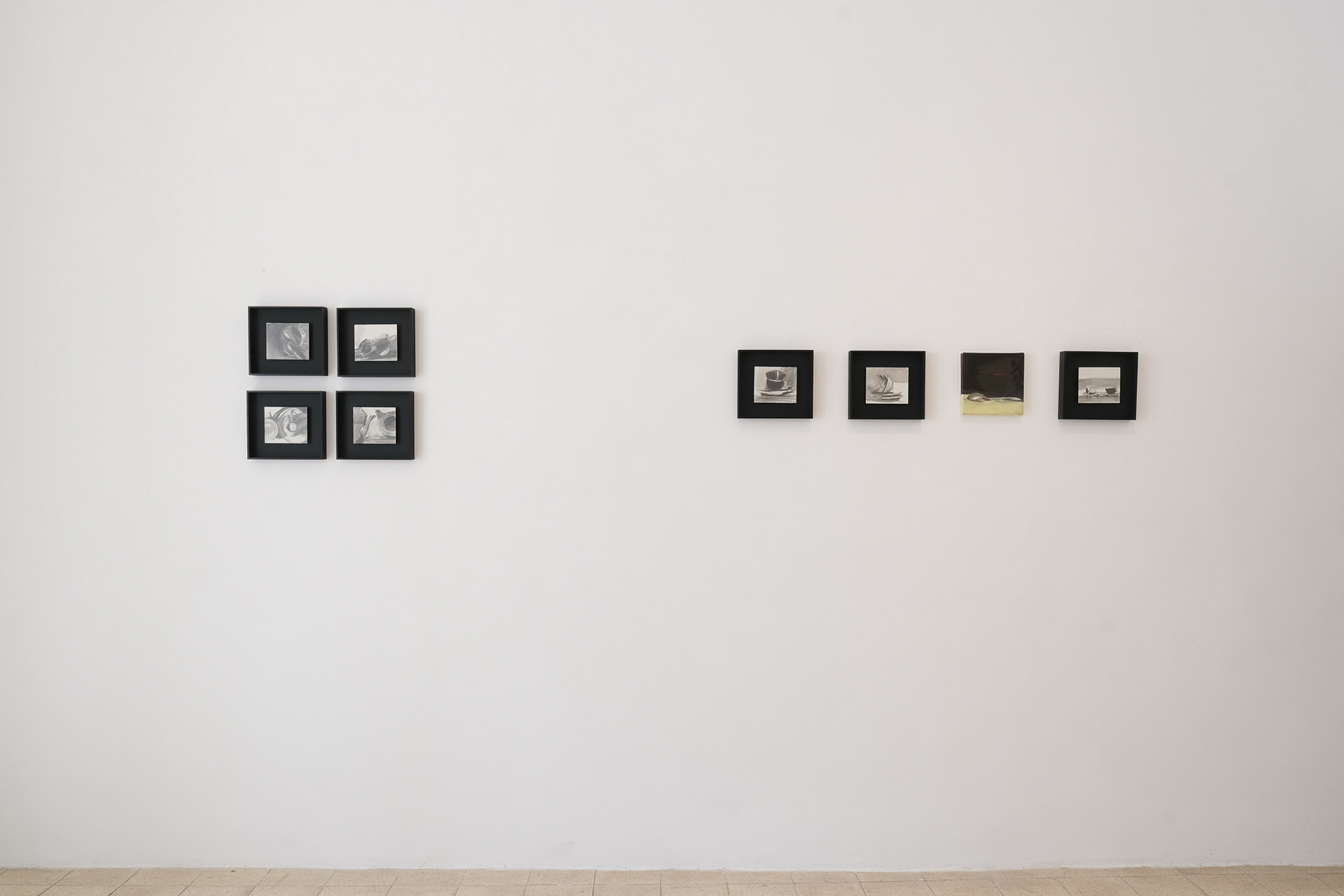
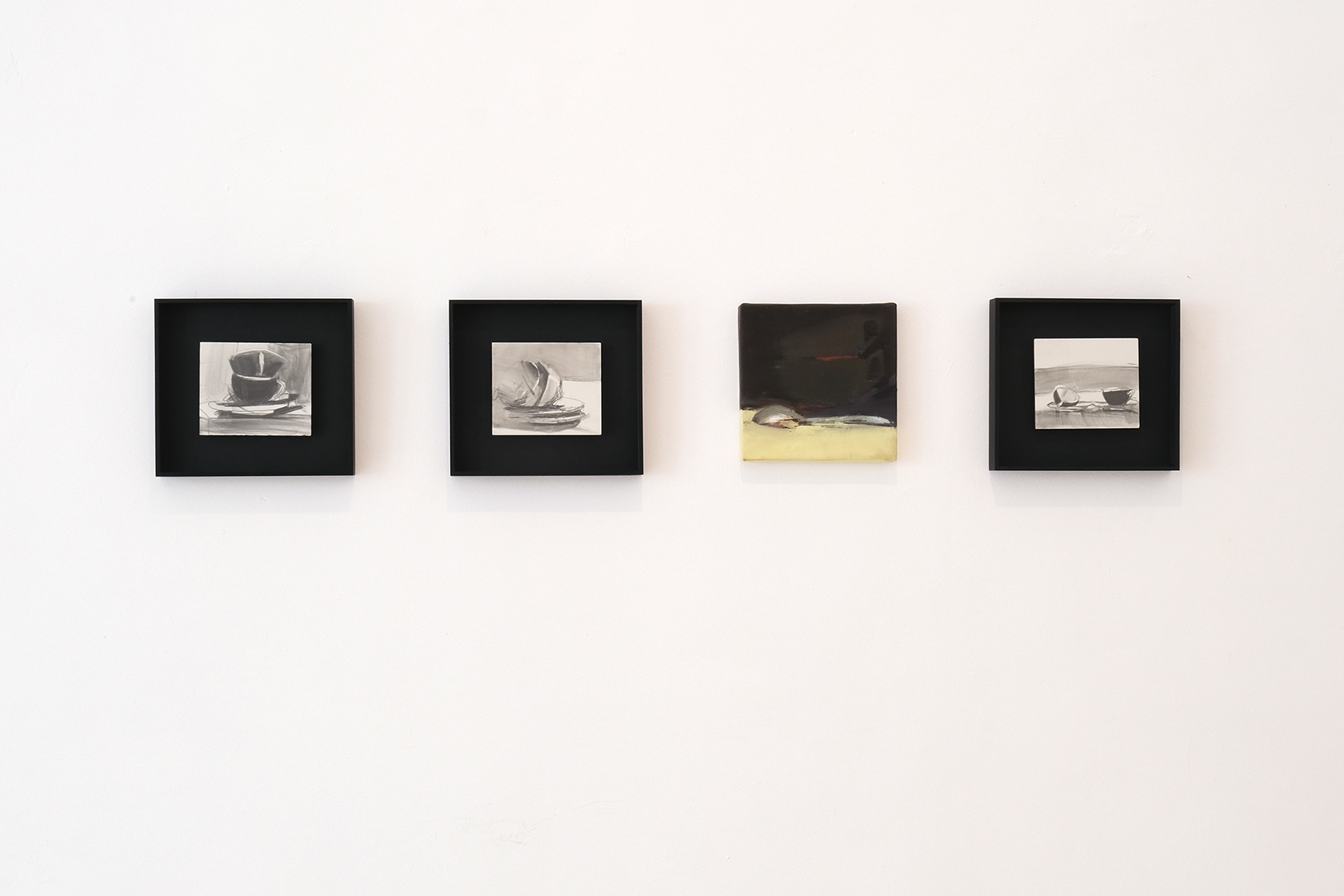
In the series “Grandma Betty's Tea Set”, Yael Boverman-Attas paints cups, saucers and other seemingly trivial porcelain dishes. However, the manner of painting, the atmosphere, and the emotions aroused by her paintings, represent images that are beyond the mundane. The transfer of an object to its representation, and especially the way of depicting that transfer - and the dark concealment it sustains - is the story behind the series.
The objects in the paintings are detached from their context. This isolation charges them with a symbolism rich in memories and actions, talks, and whispers around the tea table. They symbolize a moment of repose and human intimacy. Moments when the still cups were witness to all too human, unremarkable or elating stories. The drink poured into them, hot or cold, also represents the feelings and events accompanying their very occurrence. They are more than a merely drawn object; they are a personified object. Reminiscent to a great extent of the painted vessels of the Italian Giorgio Morandi, each of which is endowed with human characteristics: sensitive, vulnerable, stable, extroverted, and so on.
The cups represent the persons absent from the painting, the absent operators or absent attendees. You can virtually feel the fingers holding them, the unique way of bending the body for each man or woman, the voice that accompanies the conversation, the whispering, laughter, and many more emotions and gestures. They are here and present, despite not being depicted in the painting.
These events are engraved in color: fine lines, counter harsh and fast lines. The light cast on the cup or that which is faded and gone. Each nuance gets a unique characterization. In the painting of the kitchen, from the series "Silence in Three Languages", the empty space evokes another source of influence for Boverman-Attas - the American painter Edward Hopper, who skillfully depicted spaces of human loneliness crying from every line and every stain of color. Boverman-Attas’s cups are as lonely as the people who held them.
The cups tell us stories about the gulf between refined beauty and absolute and unrefined evil, which invaded the bourgeois home and undermined the existing order. Underneath the cups, the manufacturer’s trademark in the image of the German eagle is stamped over and covered. The deletion of the manufacturer's symbols of the German eagle at the bottom of the cups is fascinating. Why did they prefer to cover the damned symbol and hide it, instead of just smashing the vessels to pieces? Is there an attempt to eliminate, or contest against the hatred inherent in these symbols, thus bearing witness, even if hidden, to absolute evil? Is this an act of protest against a regime that promoted extermination, racism, and destruction of culture?
For Boverman-Attas, the process of painting is also a process of distancing, perhaps coming to terms with the past, and exploring the sentiments it evokes. She does not erase the past but hides and leaves a trace of the pain. She does not avoid but celebrates the beauty and delicacy that exist alongside ugliness and evil. Beyond that, there is a kind of victory here; The fragile vessels that survived represent the people who held them and are no more, but their memory remains in the hearts of the loved ones. The painting by Yael Boverman-Attas emerges as an act of love, reconciliation, remembrance, and leaving a testimony that does not vanish with death but with life - the drinking, the feast, the embrace of a hot cup in tender hands. Small moments of life.
Hagai Segev






___
Grandma Betty is not my grandmother. She is the mother of Marlene, my mother's best friend. Sister-Friend. I miss the smells of Marlene's cooking (the intoxicating combination of cumin, turmeric and cinnamon), and the wonderful recipes I learned from her, frequently served on our table, I prepare regularly (my mother didn't really like to cook). So it turned out that I spend some quality artistic time with the collection of her mother Betty's Tea Sets, which came to me and brought with them a gust of inspiration.
For years they were stored in boxes and suppressed the stories they carry, the way disowned objects do. Until they were brought to light, dazzled by sights of modernity to which they were exposed.
They came from another world and today they find it difficult to fit in without looking down on six shekel Ikea mugs. Most of them were produced in factories established in pre-war Germany. One thing led to another and they found their way to tables teeming with elegant guests, who indulged in the opulence the dining table had to offer, surrounded by cigar and pipe smoke and the clatter of cutlery, glasses and jewelry, and cordial hosts.
At coffee and tea meetings, they heard the most hidden secrets of the heart and of the business, and some gossip sweetened by crumbly delicacies.
At some point I noticed the strange stamp underneath one of the cups, intended to cover the manufacturer's original trademark. When I scratched a little, I discovered a horrifying German eagle. I assume the symbol was hidden so as not to choke the larynx of the sensitive diners. From that moment it was clear that they will become the subject of a painting
There is something very liberating about looking at the articles of another family, with the stories they bring with them.
My grandmother Tova, whom I did not know, loved crystals, and the ones that survived are still stored away.
My beloved grandmother Esther arrived in Israel with a few small pictures and one feeble child.
Yael Boverman-Attas


